Book Free Demo
Categories
Grocery

How Online Grocery Marketplaces Are Empowering Small Businesses

E-commerce has completely redefined the traditional shopping methods. With the changing behavior of customers and technology disruptions in each sector, the online business models have made their way into every business vertical. Mobile commerce has taken the game to the next level as customers prefer to buy all their stuff just at a tap while sitting anywhere and anytime. Other than the shopping platforms, marketplaces are becoming popular among masses rapidly. Unlike a shopping platform, a marketplace may or may not have inventory of its own.

The main motive of a marketplace is to connect buyers with the apt sellers through an online portal. Let us understand this with traditional example.

A shopping complex sells its own inventory and customers pay to the single business owner for purchasing any goods. On the other hand, if you visit a marketplace where all vendors are selling different goods, there you are purchasing goods from different vendors. The vendors pay certain price to use the space. The responsibility of getting the goods and then selling them to the customers is of vendor’s.

Similarly, an online marketplace is just a platform where different service providers sell their services or products while paying a certain amount from their sales.

Marketplace can have any type of businesses enlisted to sell their products or offer services. From selling merchandise to hand-crafted pieces to selling bakery stuff; marketplaces are a great way for small businesses to connect with their customers without spending a lot of money. In this blog, we will cover the grocery marketplace business model and how it benefits the small grocery business owners.
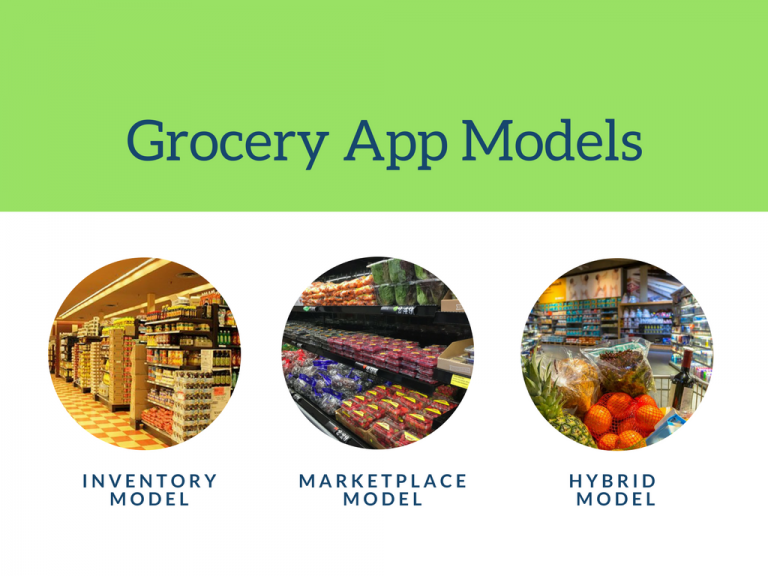
Grocery business model can be any of three primary models:

  1. Inventory Model: This model is for big grocery business owners who sell their own inventory on their own platform. There are no shared profits in this model.
  2. Marketplace Model: This model is for small grocery businessmen who cannot afford to make their own solution. So they sell their goods on somebody else’s marketplace on some commission or profit sharing.
  3. Hybrid Model: This model is combination of the Inventory and Marketplace where a business owner can sell his own goods as well as let others sell theirs on his platform.

The most beneficial among the three is Marketplace model that empowers small business owners by providing them a space to sell their goods. The marketplace owner does not need to maintain any inventory or ship products. Thus, marketplace owner has lesser headache and more profits.
How Grocery Marketplace Works?

The success of online grocery business depends upon two factors:

  • Enlisting local vendors on your platform
  • Creating a powerful delivery network to ensure on-time deliveries to your customers

Marketplace owner earns through commissions from vendors primarily. A customer places an order through the marketplace and makes the payment. The payment is received on marketplace owner’s end. After the completion of order, the vendor is given his payment after deducting the commission.

Other than commissions, there are other revenue generation methods for the marketplace owner. There can be periodic subscriptions that have some offer or discount along with to engage more customers. There can be secondary revenue methods such as:

  • Featured content such as product of the week, seller of the week.
  • Banner Ads
  • Sponsored blog content
  • Branded merchandise
  • Trading data to research firms

These methods may work slightly different for different companies due to their target audience, market and user acquisition techniques.

How To Make Your Grocery Marketplace Successful?

The number of factors can be endless. That being said, understanding the psyche of your customers would make great difference in defining the success of any business. From our research, here are a few crucial factors that can make or break your online grocery marketplace.

UI Interface

A buying decision is usually influenced by the looks of a product or the marketplace. Suppose you enter a huge store that has all its products nicely stacked in rows in front of you. Even though you do not need any of those, you would want to have a look and then end up buying at least one from that specific section. The modern customers do not rely on making shopping lists. Rather they buy what they see. Thus, to get your customers buy products from your marketplace, you must ensure:

  • All products are nicely categorized
  • Navigation is smooth and simple
  • Product pictures are 3f high quality

Simplified Product Discovery

As mentioned earlier, you should not make it difficult for the customer to look for products. To make it more simplified, you can ask a few questions to your customer that will help you display relevant products to him/her. Fetching the age, interests and job occupation details can help in narrowing down the product list that your user might be interested in buying.

Your solution should also focus on what your customers do not like. Negative feedback is more important than the positive feedback. Thus, you should also maintain records about products that your customer dislikes. This can be done with a simple optimization algorithm that interprets likes and dislikes based upon the swipe direction (just like Tinder).

Wishlist & Shopping Cart

To know the interests of your customer, wishlist is the best way. Moreover, you can always retarget your customers based on whatever they have added in it. However, a grocery business does not necessarily require a wishlist but having one would not cause any harm.

Shopping cart should be convenient to use. Adding or removing products in your cart should be fast and easy, failing which will lead to uninstall of your application.

Payment Methods

Customers prefer easy checkout methods like Amazon and Ebay. Add a faster payment gateway like PayPal, Stripe etc. and let your customers make payments at a tap. Avoid using a payment option that people have not heard of because they only choose reliable gateways that they have already used or heard of.

Delivery Is The Key

This is the most important factor in any on-demand business, especially grocery. On-time delivery with quality goods will help you retain customers. No matter how amazing your App Interface is or how fast your checkout process is, if you have a weak delivery network, you will lose the entire game. In case of marketplace, you can either get the products shipped under your business or ask the vendor to do it.

Marketplace Reputation

Your brand reputation is dependent on the vendors that are listed on your marketplace. Therefore, you must ensure that none of them is spoiling your brand name with their unprofessional services. Having professional vendors on your marketplace should be your main aim. To do so, you must have feedback from customers and take actions accordingly.

Bottomline

Like any business owner, a marketplace owner also has a lot to manage other than the inventory and shipping. That said, small businesses get to earn a lot from this business model. With the changing needs of modern day customer, there has been a huge impact on the non-tech business sector that comprises of local grocery shop owners too. Thus, with marketplace they can make a comeback in their business and earn more money like never before. Moreover, grocery business can never fail as it is the basic need of every human being.
Categories
Grocery

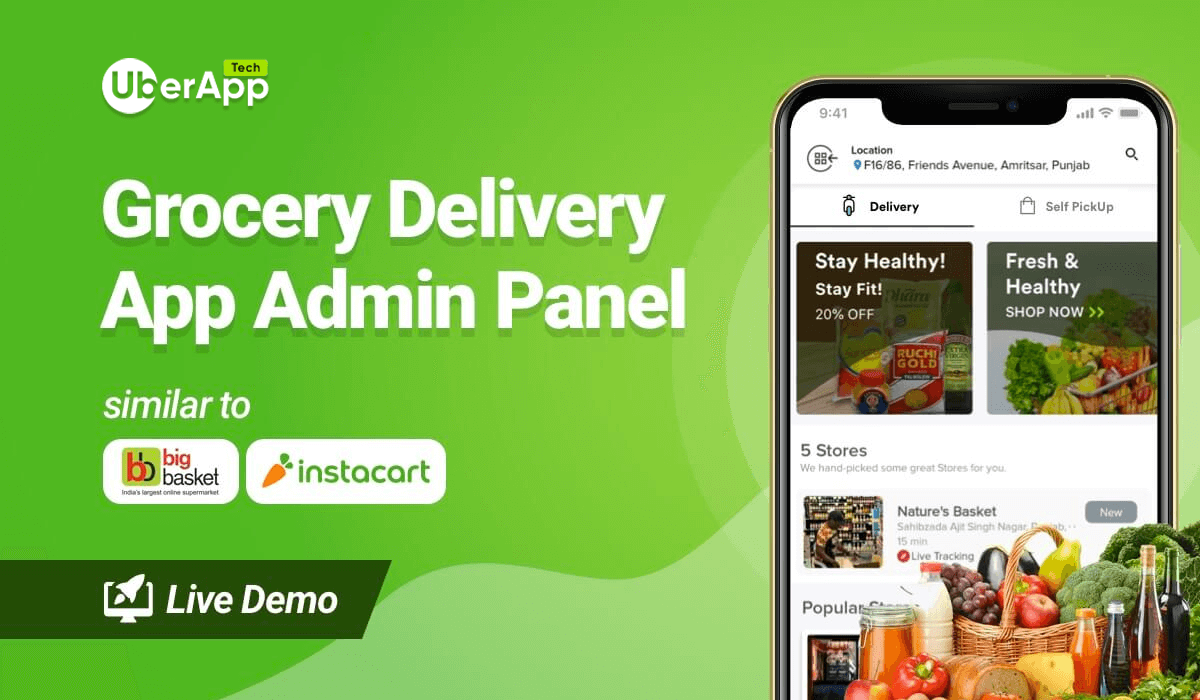
Grocery Delivery App Admin Panel

Categories
Grocery

What Does it Cost to Develop A Grocery Delivery App?

As the online shopping world connects the public to great convenience, the grocery domain also barges into digitization. Thinking about how? Well, here we are referring to the convenience of grocery delivery apps.  

The tinge of digitization in almost all operational processes of grocery delivery, ordering & tracking has made it easier to serve people, facilitate payment options, keep a track of orders, and whatnot. What’s more interesting is the fact that now customers don’t require to visit the grocery store in person. Sooner or later, we all understood its necessity in pandemic times. This illustrates how online grocery marketplaces continue to empower small businesses effectively. 

The revolutionary changes in the grocery delivery app world:

Research says the grocery delivery and shopping experience are turning out to be the limelight factor for the mCommerce world. As of now, around 66% of customers prefer using their smartphones to shop for food, groceries, etc. online. Furthermore, the research unravels that more than 87% of grocery and utility purchases in the US are done via tablets or smartphones. 

Believe it or not, it’s the ideal time to invest in a grocery delivery app to tenfold your profits while making an identity in the marketplace. Still, wondering if you should get the best grocery delivery service app or not? 

Continue reading to reveal the answers or quickly surf through this knowledge-enriched video made for you.

Facts Disclosing the Ever-Growing Demand of Food-Based Businesses:

Surely the opportunity to make millions of dollars through the best grocery delivery app is here. In no time, it has become the biggest segment of food-based online businesses these days. In return for progressing profit rate, all it requires is to develop a grocery delivery app with all interfaces and features required to make a much-required difference. 

Here are some stats to support the statement:

  • 63% of global smartphone users prefer to shop online from brands and companies displaying relevant products. 
  • As per Statista, the total number of online shoppers in the United States is expected to grow by 30.4 million by the end of 2022. 
  • It may interest you to know that the sales of grocery items and market are risen by 15% in the UK with a total worth of £900m.  Source

Essential Factors to Know Before Getting Your Grocery Delivery App Developed:

Generally, there are two on-request grocery delivery app models. You may get to know about both of them when approaching a reliable mobile app development company. The two models include-

  1. The delivery administration collaborates with multiple stores and offers grocery delivery conveyance. 
  2. The delivery administrator has its own delivery and inventory management.

One of the biggest examples of the former is Walmart. The giant has its own application, delivery services, inventory management, and so on. 

How Does It Work?

A quick overview of how the best grocery apps work and offer you ultimate convenience.

Necessary Functionalities of a Grocery Delivery App Discussed:

Registration:

The hassle-free registration process is one of the primary drivers standing behind the progressive profit graph of a grocery delivery app. Thus, it’s essential to keep the first step easy, quick, and effective. Here, the best approach is to keep things brief. 

Location:

Almost all grocery delivery apps come with a location module meeting the grocery delivery requirements for a specific location. Such features are fueled by Google for a seamless experience. Here, the customers’ exact location is dependent on the Geo-location set by Google API for that particular area.                       

Online On-Demand Integration:    

Third-party integration is a common scenario in the current times. Be it for payment or joining hands with different social media platforms; integration is becoming a must for all. The more integrations you propose, the more you raise the grocery app development cost. Thus, it’s essential to be selective with the required set of on-demand third-party integrations. 

UX/UI:

Grocery delivery apps require an impeccable user interface keeping the matured target audience in mind. This is essential to keep the end-user engaged while adding value to the app usage experience. This happens when you focus on: 

  • Rich & Robust UI/UX:   

UI/UX plans and strategies work as the soul of a solution/app. It lets the user experience a seamless flow in the final app. 

  • Voice search options:

Beating the heat of cut-throat competition gets easier with blending easy-going and advanced features to your end solution. One of the biggest examples is infusing a voice search option. This lets your end-users experience AI innovation. 

  • Backend: 

A robust backend administration assists in letting the app run in a state of harmony while not hampering the usefulness of the grocery delivery app. 

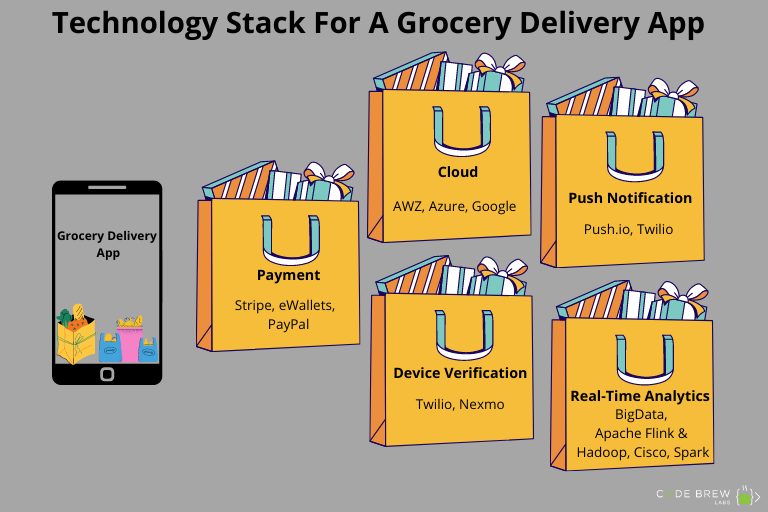
Required Technology Stack:

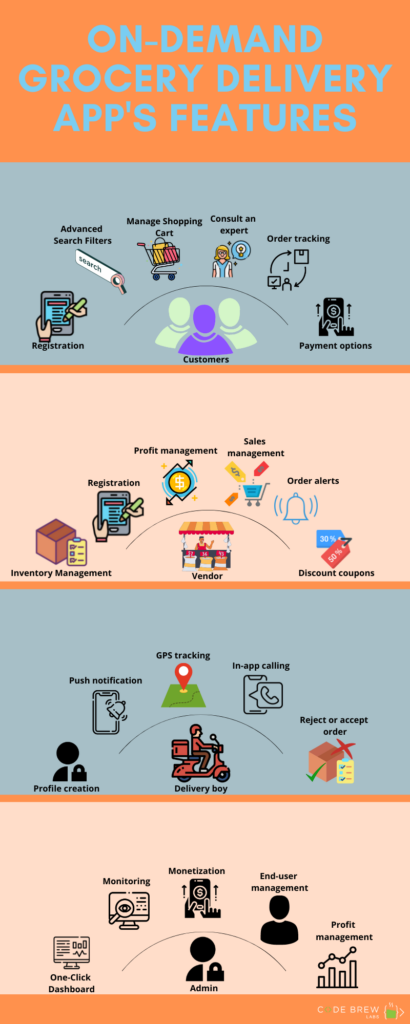
Grocery Delivery App Features Explained Based on Different Interfaces:

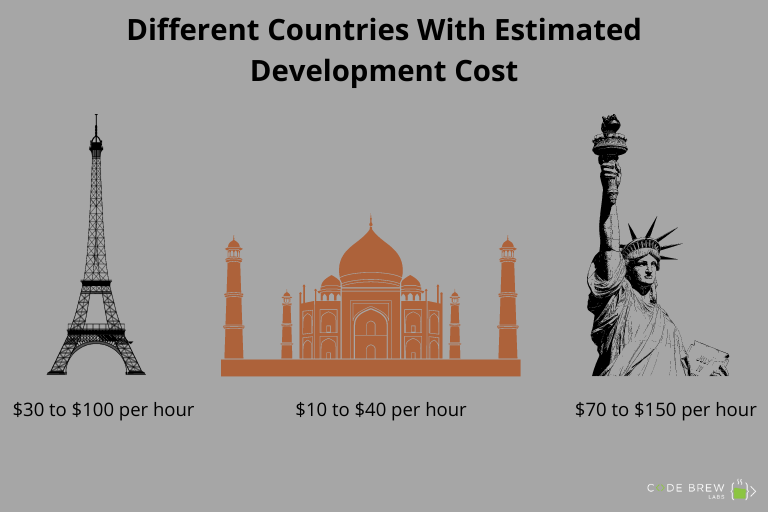
Location-Based Cost Parameters Discussed:

The overall grocery delivery app development cost depends on many factors covering – outsourcing cost, technology stack used, hours dedicated, and much more. But there is something above all and that’s the preferred location. 

Here we are referring to seeking outsourcing help from a particular country. For example – the mobile app development cost in India varies from $10 to $40 per hour; on the other hand, it may go up to $150 for countries like the United States or the United Kingdom. 

Let’s have a quick look at the location-based costing:

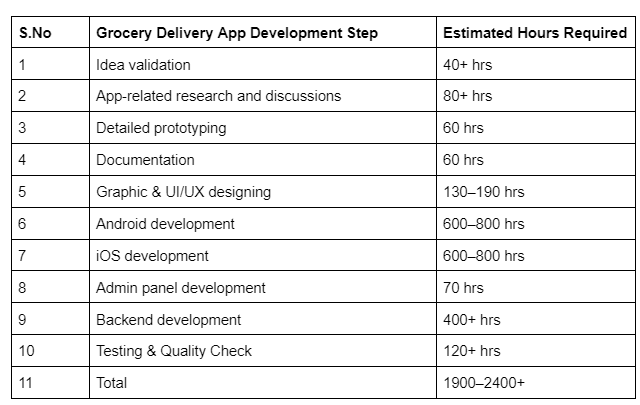
Detailed Cost Breakdown to Support Grocery App Development Cost Estimation:

cost breakdown for grocery delivery app

As mentioned the overall time required to develop an on-demand grocery delivery app is 1900 to 2400 hours (approximately). These hours when multiplied with the above-mentioned location-based rates can give you a fair estimate of app development costs. For instance – a grocery delivery app may cost you around $20000 to $50000 in India. On the contrary, the same app development service cost may go up to $40000-$200000 in the U.S or Europe. 

Therefore, choose wisely!

Besides, the app may cost you for app marketing aspects, app updates, overall maintenance, and reusing the existing code. 

How Code Brew Labs Can Act As A Helping Hand Here?

The above-shown grocery app development cost breakdown must have given you a fair idea of the overall expenses incurred in this process. We are sure now your next aim must be to reduce the expected expenses. 

That’s when Code Brew Labs come into the frame. We have different white label base app models meeting all static needs while always keeping the customization scope open for you. From features to developing different interfaces for your dream hybrid or native app, we have got you covered. 

All you need is to share your grocery delivery app development cost expectations, and leave the rest on us! Step ahead, connect, and brace yourself to brew some successive grocery delivery app ideas with our tech-savvies. 

In the Nutshell:

When talking about analyzing the overall cost of grocery app development, it’s wise, to begin with evaluating different features, factors, and functionalities adding to the total cost. A suggestive approach is to jot down business needs, create a wireframe of required features, and then calculate the overall amount. 

A well-versed mobile app development company professional may be an apt choice to come to the right conclusion! 

Watch Live Demo of Our White Label Grocery App Solution – Instacart Clone: 

Categories
Grocery

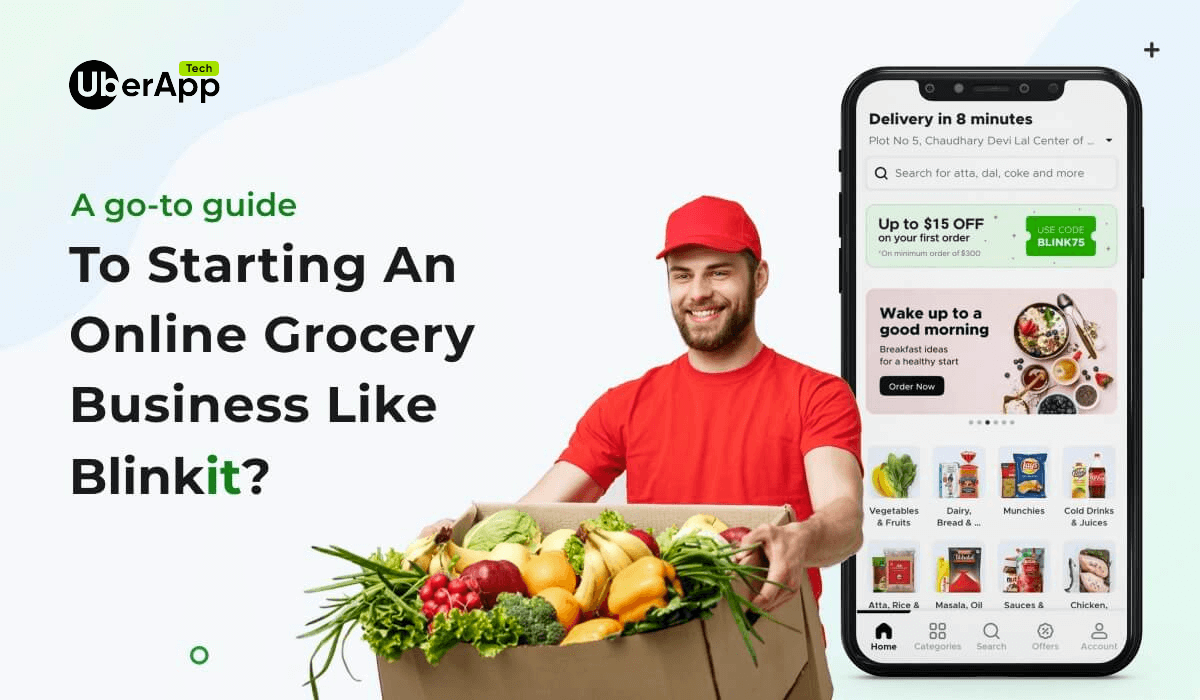
How to start an online grocery business like Blinkit? A go-to guide

Started as a startup for providing quick grocery delivery on customers’ doorsteps, Blinkit has come a long way since its inception in 2013. As per a report from Statista, the on-demand grocery business had a revenue of 27.25 billion Indian Rupees (over USD 340 billion) in 2021. With the global online grocery market size at USD 285.70 billion in 2022, this worldwide phenomenon to start an online grocery business is hardly a surprise!

One reason for such a huge boost in this sector is affordable internet services and everyone being more accustomed to shopping online. And this implies that there has never been a better time to start an online grocery business like Blinkit than now.

Are you looking to make the most of this lucrative market opportunity? This detailed guide will give you an overview of all the necessary steps you must take to start a profitable online grocery business like Blinkit.

What’s the Future of Online Grocery delivery business?  

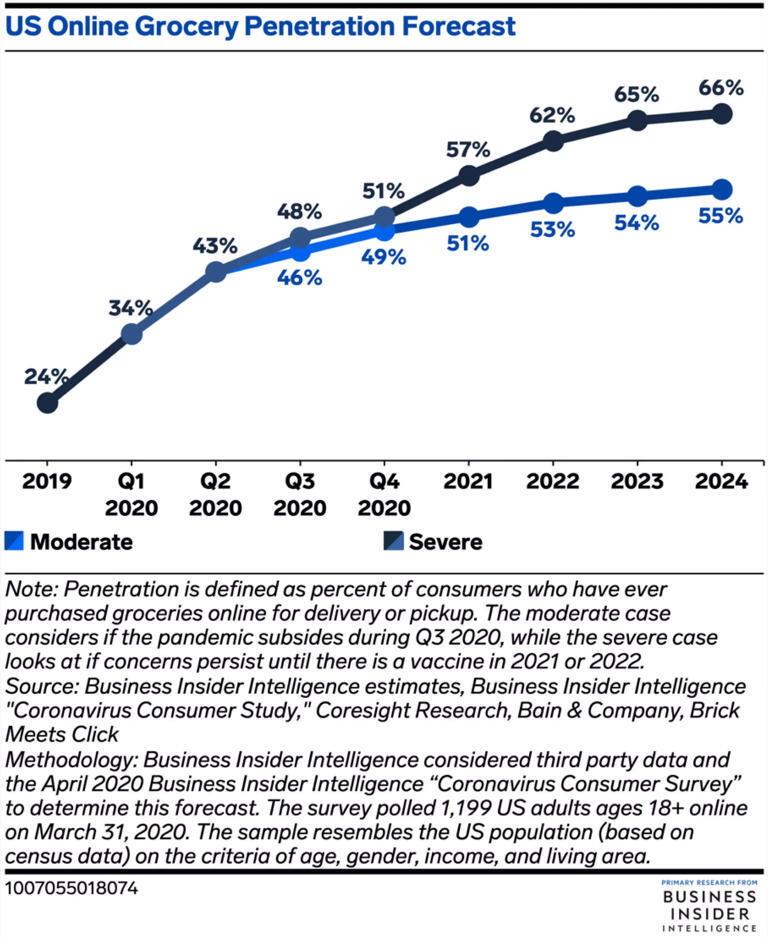
It’s remarkable how Covid 19 has boosted the online grocery business globally. As per a survey, Covid-19 led to a 9-12% surge in contactless shopping of e-groceries, especially from fresh and frozen categories. Interestingly, before the world came to a standstill, these numbers ranged from 3-4%. Interestingly, what made the grocery business grow unprecedentedly was also evident in other e-commerce business sectors as well.

As per a study, today, a major part of our population is dependent on the conventional source of income – working 40-60 hours a week in an office. This working pattern leaves people no time to do the basic day-to-day things, like buying groceries and other essentials. With more people operating on the same working pattern, people would want to use their limited time doing something valuable. Like spending time with their family & friends or pursuing a hobby.

And with everyone equipped with a smartphone, the online grocery business is more likely to grow in the coming times.

What are the ongoing challenges?

No matter how lucrative this grocery delivery business sounds, it has its shortcomings. Let’s take a look.

  • High-Competition

This is no secret to the world anymore. With Covid-19 boosting the online grocery business exponentially, it is getting the attention of major investors like never before. As a result, the online grocery sector is facing strong competition.

  • Low-Profit Margin

With people having multiple options to select from, it is becoming a game of – who is providing better services at a cheaper price. In addition, competitors also use discounted rates on products to lure in customers. So, even if one accomplishes to drive sales with such offers eventually, it doesn’t leave them with high-profit margins.

  • Storage

If you opt for an inventory-based online grocery business, you need to have high storage capacity warehouses. And with groceries like fruits and vegetables, you will also need to refrigerate them efficiently to avoid degradation. For that, you need significant capital investment to get things running.

  • Logistics

You can get away with bad word of mouth if you are running a regular store. For online stores, you can’t afford to do so, especially at the start of a business. So, you need to ensure the timely delivery of the correct food items at the right address on every order. With multiple orders on the go, it could be a difficult task to pull off. However, this can be accomplished with well-trained staff and an efficient delivery management system.

Pick a name for your On-demand Grocery Business

The name of your business should contain everything there is to know about your business. However, that’s not necessary. If you could choose a name that can easily be recalled and remembered by your service consumers, great!    

Get your Business Registered

Getting your business registered is one of the initial requirements for any business. Here are some crucial aspects of the business registration process.

  • Get an online trader’s license
  • Check the regional taxation process.
  • Get a food license if you’re selling degradable food items like fruits, vegetables, etc.

Pro Tip: Often the local and regional rules for business registration are different. So, it’s understandable if it gets a bit confusing for you. If it feels like a bit of a hassle to get your business registered, you could hire a legal advisor for easy proceedings.

Business Model for Online Grocery Business

Now, the business model for your grocery store dictates how your business operates from point A to Z. And so, to make money from an online grocery business like Blinkit, the business model is divided into three categories.

source

Multi-Store

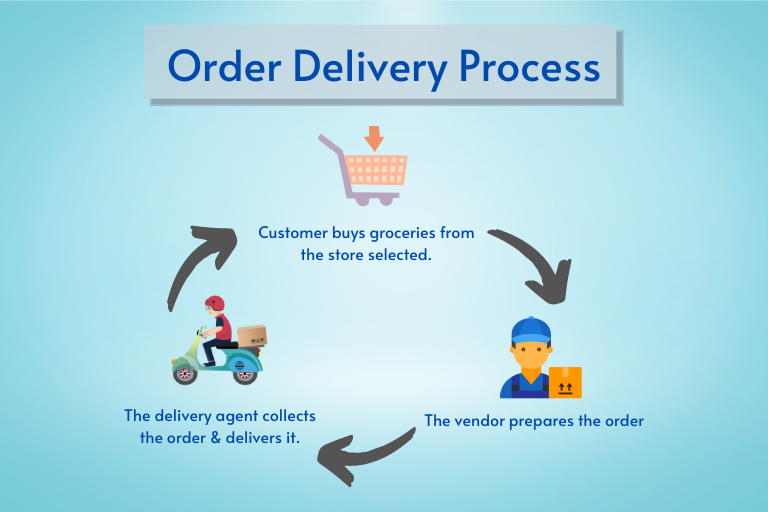
This is one of the go-to business model types for a profitable grocery delivery business adopted by major players in the industry like Zomato, UberEats, etc. In this model, you are the middleman between the grocery store and the customer. You simply provide a website or application to both parties and manage orders. This is how it happens.

  • A customer orders groceries from his selected store through your app. 
  • A vendor prepares the order
  • A delivery agent collects the order and delivers it to the customer.

Here’s how you make money from this model.

  • You collect commission from each order.
  • Commission collected from each subscription for listing.
  • On-site promotions by the vendor.
  • The commission collected delivery Charges from the customer.

Inventory

The inventory-based business model works wonders in efficiently managing the overall process. Here, all the grocery is stored in an inventory warehouse where their quality is ensured. An in-house or a third-party delivery agent picks up the order and delivers it to the customer.  This reduces the chances of delivering bad-quality food products to customers.

In this model, you can make commissions as follows,

  • On the customer orders
  • The discount you get by buying large quantities of groceries at wholesale price
  • From third-party delivery agents

Shopping Model

Unlike the multi-vendor, the business owner has all the rights to select a vendor for the customer order. In addition, the system also uses in-house delivery agents. This business model is used by many e-commerce startups like Instacart, Amazon, etc. Here, the majority of earnings come from,

  • Customer’s orders
  • Commission earned on each delivery from the vendors
  • Vendor subscription fees

Get yourself an Online Application for your Business

Once you select a business model, the next important aspect to start an online grocery business like Blinkit is an application. A lot depends on the look and feel of an application. Here are the three basic types of grocery delivery businesses to choose from.

  • Ready to launch App

If your requirement for an app is minimal, a ready-made application would be a great option to entertain. The application needs some minor changes, like brand name, icons, and aesthetics, and you can claim it as yours. But for that, you need to find a development company with a product that offers all the features you want.

Though it’s comparatively a cheaper option than a custom build, you might have to settle in terms of the UX/UI design. Also, you won’t be able to add additional features if you want.  

  • Custom-Build App

Whether it’s UX/UI design, the icons, features, or the entire layout of the application, a custom build application can have everything you want. You will have more control over app design, and development. It also offers a great opportunity to accompany everything that your competitors lack, like ease of use, navigation, etc. 

However, the flexibility that a custom-build app provides comes with a higher price tag. Also, it takes more time to develop a custom app than the other options.

  • Subscription-based App

A subscription-based app comes with a variety of pre-build applications ready to deploy once you subscribe to their services. Once subscribed, the service providers rebrand the application name as yours.

Now, even when it’s the easiest and cheaper way to start an online grocery business, you don’t have full control over all aspects of the application.  

Features you should Integrate into your Grocery Application

The better the services you would want to offer to your customers, the better the features you will have to integrate into your application. For one thing, it should be working on reliable technology and offer an engaging interface to the customers. Here are some of the basic features you must have from a customer’s point of view.

  • Easy Navigation

The ease with which a customer travels from point A to B on your online grocery application determines whether he/she will continue using your services or not. As per a basic rule of thumb – if you could make it understandable to a kid, the navigation is great.

  • Multiple Payment Options

Having a couple of payment options always comes in handy. Check the trending payment methods being availed on competitors’ websites. You must offer more than the conventional payment methods, like payment in cryptocurrencies or Buy Now Pay Later options. This way you will be able to attract different types of customers.

  • Tracking

Today, almost everybody likes to be aware of their order – where has it reached, is it out-for-delivery yet, what’s the status of the order? So, you must have a tracking system to keep your customers updated on their orders.

  • Multiple Store

If you choose a ready-to-launch business model, it would be better if you provide your customers with multiple stores to choose from. Not only it’s convenient for customers, but you can also benefit from varying commission rates from different vendors.

  • Avail Click and Connect Option  

The click & connect option was trending during pandemic. This is how it goes – a customer selects the food items and the store he wants to buy from. Later, he either collects it directly from the store or at a pick-up point.

Today, even when the effect of the Covid-19 pandemic has receded to a major extent, it hasn’t completely gone yet. With new Covid-19 waves hitting us time and again, there’s a chance of people still wanting to pick up their order from a nearby store or a common pickup point.

How Much Does it Cost to Make an App Like Blinkit?

The app development process eventually boils down to one question – how much does it cost? Well, it all depends on certain factors. Let’s take a look at them.

  • Features and Functionalities

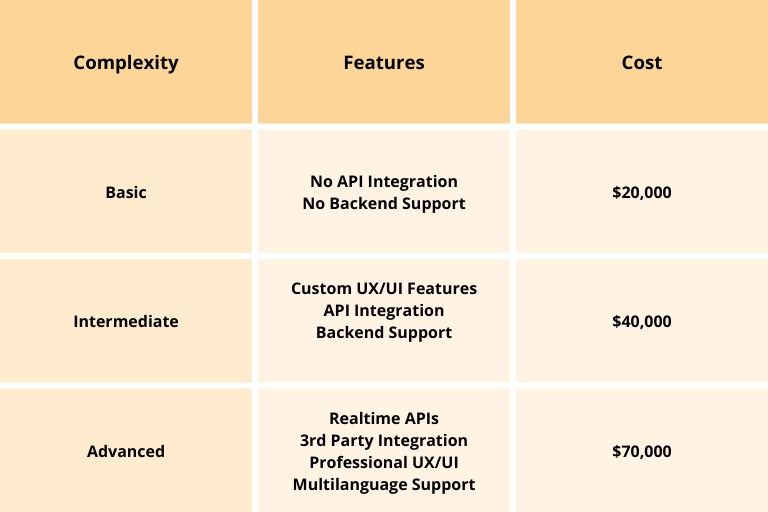
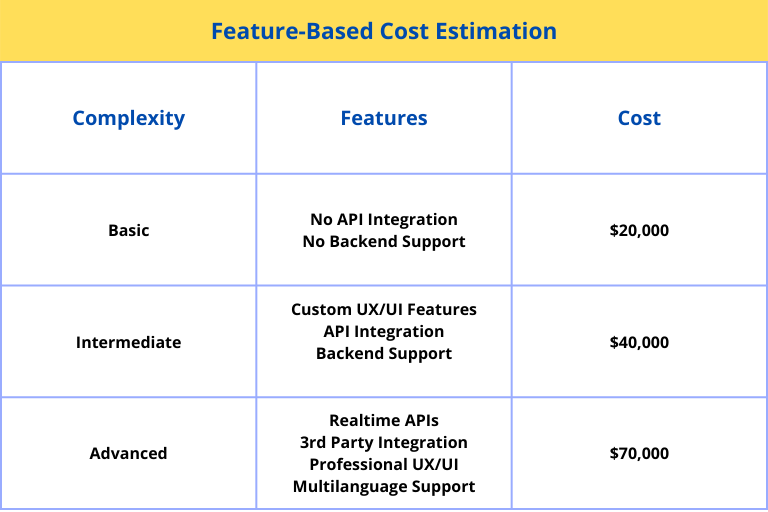
A ‘Basic’ feature version with no APIs & backend support will cost you up to $15,000 – $20,000. However, the ‘Intermediate’ and ‘Advanced’ versions with custom UX/UI features, real-time APIs, backend support, and more can cost up to $40,000 and $75,000 respectively.

  • Platform

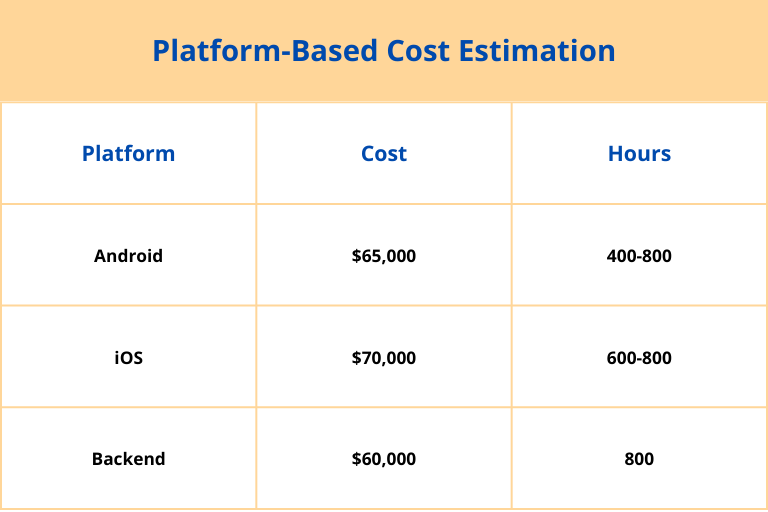
If you choose to launch it on Android and iOS, it will cost around $65,000 and $70,000 respectively. However, it will cost even more if you launch it on both platforms.

Marketing Techniques You Must Use to Start an Online Grocery Business

Sometimes, you need to spend thousands of dollars before you could make a penny. The statement holds true when it comes to entering a competitive business such as online grocery delivery. You need to market your brand and its services as efficiently and effectively as possible. Here are some of the result-oriented marketing techniques you could use.

  • Social Media Websites

As per a study from SmartInsights, 58.4% of the world’s population uses social media platforms like Facebook, Instagram, Snapchat, and more. With half of the world online, you can build your brand and drive organic traffic to your app/website.

  • PPC Ads

You can run ‘app download’ campaigns to boost downloads of your online grocery delivery business. And if you want to increase your user base and boost engagement on the application, you could run ‘reach’ and ‘engagement’ campaigns.

  • QR Codes

QR codes are one easy way to boost download and customer engagement on the app.

  • Promo Codes

Who doesn’t love a good discount? It’s a sure-shot way of attracting new customers. However, you need to ensure your grocery ordering experience stands out from the competitors.

  • Email Marketing

As per a study, email marketing accounts for USD 36 ROI on every dollar spent. These stats are good enough to invest in email marketing for your business.

  • Physical Onboarding of Store Owners

Another great way of marketing your application is direct contact with vendors who are interested in your application.

Final Thoughts

As per a report, the market for the global online grocery delivery sector was valued at USD 285.70 billion. And it is projected to grow at a CAGR(Compound Annual Growth Report) of 25.3% by 2030. This is beyond encouraging statistics for you to grab onto this lucrative opportunity!

However, starting any business is a huge step forward, let alone a highly competitive one like online grocery delivery or rental marketplace. It involves huge capital investment, thorough industry knowledge, and precision at each step of the process, especially when building an app.

If this feels like a lot to handle, Code Brew is here to make it easy for you! Our team of experienced individuals has a track record of building apps for several industries, including on-demand taxi services, online food delivery, and more. Check out our portfolio here!

So, what are you waiting for? Contact us to get a demo!   

Categories
Grocery

How much it Cost to Build an Online Grocery Delivery App? A Complete Guide

As you might know, there has been a gradual shift with the world taking a keen interest to build online grocery delivery businesses like Deliveroo and Swiggy. If you are also looking to make the most of this lucrative opportunity, this blog offers you all the necessary information that goes into the cost to build an online grocery delivery app.

But before we dive into the costings, what’s the reason for this global interest in the online grocery business?

Well, the online grocery delivery business has seen unprecedented success over the last 2-3 years. As per a survey, online delivery services are projected to increase by USD 800 billion from 2020 to 2025. What’s more promising is that it’s increasing at a Compound Annual Growth Rate of 25.25%. With these statistics being no secret to the world, everyone business entrepreneur wants to make the most of this golden-business opportunity.

Now, when it comes to app development costs, there are many factors that lead to the final price. And so, Code Brew also offers a detailed view of how an online grocery delivery business works and the various cost factors associated with it.

Why entrepreneurs are betting heavily on the grocery business?

Covid-19 made people pursue a different shopping method than the traditional ones. In a survey conducted by AlixPartners in 2021, 48% of consumers admitted that their shopping habits have been changed permanently. Today, more people are inclined towards shopping online instead of visiting a local store for a contactless experience.  And it’s not only about the online grocery industry, the same pattern was seen in e-commerce businesses as well.

In addition, the daily lifestyle of working-class people is also responsible for the change. As per a source, the long working hours rarely leave people with any time to do their daily chores. Thus, online shopping is becoming a natural alternative for them.

This phenomenon of more people inclining towards online shopping for all their needs is creating a business opportunity. Hence, a huge influx of business entrepreneurs coming up with innovative ideas to serve people efficiently on their grocery orders.

3 Types of Grocery Delivery Business Model

Before starting a grocery delivery business, you must know the three basic types of grocery business models. This is where the revenue comes from.

Multi-Store

Some of the thriving names in the industry like Zomato and UberEats are using this multi-store business model. In this model, as a business owner, you are the middleman that provides a website/application, interface, and necessary tools for efficient communication between a customer and the vendor.

This is how the process goes.

Here’s how you make money from this model.

  • Commission collected at each order
  • Commission collected from each subscription for listing
  • On-site promotions by the vendor
  • Commission collected from the delivery charges

Inventory

When it comes to managing the whole process of ordering and delivering an order efficiently, an inventory-based model works great. Instead of relying on the vendors to ensure the quality of grocery delivered to the customer, all the grocery item is stored in grocery the inventory. Once, the local staff checks the quality, only then it is delivered to the customer using an in-house and third-party delivery agent.

Here’s how you make a commission in this model.

  • On Customer’s orders
  • Discount procured at wholesale buying of groceries
  • Third-party delivery agents

Shopping Model  

In the shopping model, the service provider controls the entire process of grocery delivery. When a customer places a grocery order, the service provider picks up the vendor at random. After which, an in-house delivery agent delivers the order to the customer.

Here’s how you make revenue out of this business model.

  • On customer’s orders
  • Commission earned from each order from the vendor
  • Vendor subscription fees

Key Functionalities to include in an online grocery application

A well-organized grocery application consists of three key functions – user panel, admin panel, and delivery panel. Each of these attributes is essential for a systematic operation between different elements of the process – a customer, service providers, and delivery staff.

User Panel

A user panel must consist of all the customer-centric elements. Here are some go-to functions to include in your user panel.

  • User Profile and Registration: This is the basic function that involves customers logging in or sign-up to their account using phone number, email, or other preferences.
  • Customer Feedback: A user wanting to place an order for the first time is more likely to trust your services if he sees some relevant customer feedback on your platform. It’s also a blessing in disguise considering that you will have to up your game so that you don’t get bad reviews.
  • Order Tracking: A customer likes to know where the order has reached. A real-time tracking system provides all the order-related updates.
  • Search Bar: Instead of searching for any product under a specific category, a customer likes to search for the product directly.
  • Order Management: This feature allows a customer to manage their orders on the go. Whether they like to cancel the order, change the address, or schedule it for a later date, they should be able to do it without a fuss.
  • Payment Options: You must offer multiple payment methods for customer convenience. Try to come up with new payment options like ‘Buy Now Pay Later,’ along with the conventional options like Cash on Delivery, Debit Card, Credit Card, and UPI payments among many more.

Admin Panel

An admin panel is a function used by the people responsible for the smooth management of the customer order.

  • Dashboard: A dashboard is a must-have tool to track and manage customers’ orders. It also helps to check the user experience on the application and offers valuable data to improve overall services.
  • Order Allocation: This feature allows easy allocation of new grocery orders to various stores and also monitors the swift order execution.
  • Payment Management: The feature helps in hassle-free acceptance and management of different payment methods.
  • Assign Managers: Different managers are assigned to specific tasks and operations for the smooth execution of the on-demand delivery business.
  • Inventory Management: It also allows for the management of the inventory that helps in managing customers’ orders efficiently.
  • Customer Management: This feature allows grocery shop owners to easily manage customers’ orders on the go.

Delivery Panel

Here is a list of grocery app functions you must have in your grocery delivery application.

  • Geo-Location Services: You can access the real-time location of the delivery agent by integrating GPS in your application.
  • Accept/Reject Delivery Request: This allows for the easy acknowledgment of quick acceptance and rejection of a customer’s order.  
  • Delivery Request Notification: It sends a notification to the store manager of all the orders that have been placed on the application, with all the necessary detail.
  • In-app calling/In-app chat: A delivery agent can efficiently communicate with the store manager and customer for any changes made in the order delivery.
  • Delivery Confirmation: Once the order is delivered to the customer, the delivery agent gets a notification of its confirmation.

Feature-Based Cost to Build an Online Grocery App

The variety of features you chose to have in your grocery delivery application accounts for the total costs of the app development. Here are the three versions of the feature-based costings.

Platform-Based Cost Estimation

The cost to build a grocery application further extends to the platform you choose to serve your customers on. So, where feature-based cost estimation helps you to determine the aesthetics of the application, platform-based costing helps to set a budget plan. Here’s how the cost varies for a complex feature version on different platforms.

Final Thoughts

The complete cost to build an online grocery delivery app stands at around $70,000. However, that’s a complete package for top-notch services. If your requirement for a grocery delivery app is minimal, you may not need different features.

But here’s the thing. The current trend and the projected growth in the online grocery ordering industry in the next five years are massive. With so much potential, there will be an influx of more grocery delivery startups competing for the same opportunity, altogether. In such a competitive environment, you can only be able to gain revenue if you offer somewhat better services than your competitors.

Now, considering several factors are shaping the dynamics of your online grocery business, it might become a stressful task. Well, why not outsource the app development to experts?

Speaking of experts, Code Brew offers all the essential features and functionalities at a convenient price. Our team of experienced individuals has a record of developing thousands of mobile applications for various on-demand services.

Contact us today to get a demo! And we will discuss the successful beginning of your online grocery business.

Categories
Grocery

Why Invest in a Grocery Delivery App in 2022: The One-Stop Guide

The online grocery delivery services market share is expected to increase by USD 800.00 billion from 2020 to 2025, and the market’s growth momentum will accelerate at a CAGR of 25.25%.

But, what makes the grocery delivery services so popular?

For Customers:

Why stand in a long queue at the supermarket if you can get the groceries delivered at the tap of a button on your mobile?

What They Get:

  • Convenience
  • Better Shopping Experience
  • Save Costs (Time and Travel)
  • Access to Order History
  • Facility to Repeat Orders

For App Owners:

Why incur stocking and rental charges when inventory can be directly procured from vendors in the grocery business?

What They Get:

  • Cost Savings (Advertising, Rent, Insurance)
  • Better Client Service
  • Fully Accurate Recordkeeping
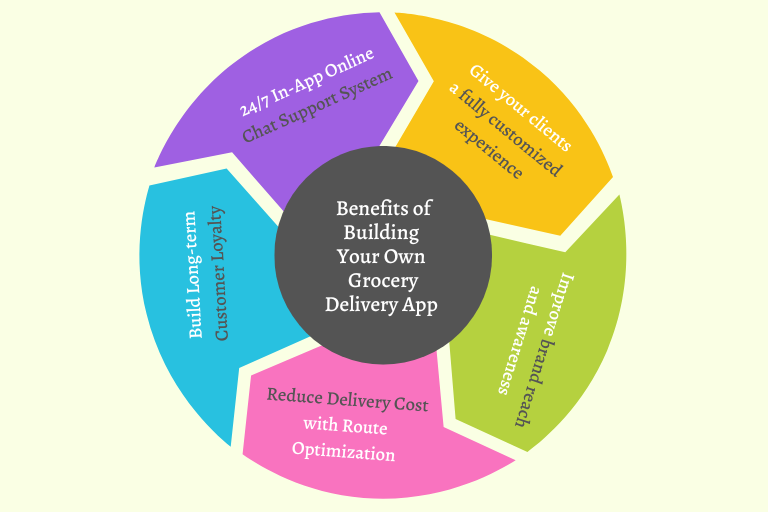
  • More Brand Reach
  • More Customer Loyalty

Top Players in the Grocery Delivery Industry

  • Walmart+
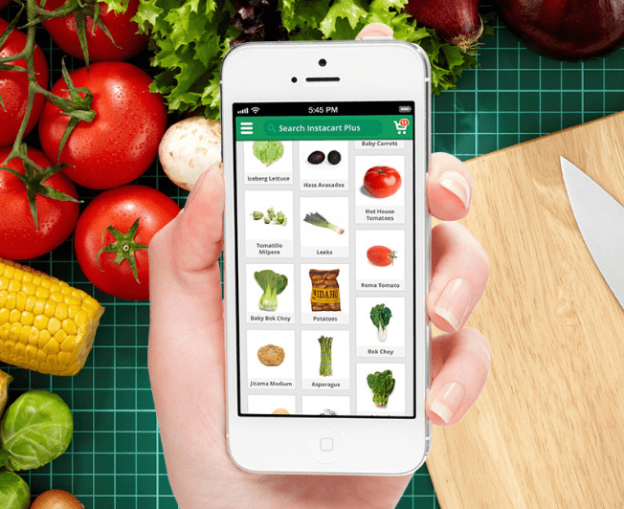
  • Instacart
  • Shipt
  • Target
  • Kroger
  • Amazon Fresh
  • Whole Foods Market
  • Gopuff
  • FreshDirect
  • Boxed

How did these grocery delivery apps make the cut?

These applications offer same-day delivery to customers simply at the tap of a button.

What’s more? Customers can place orders from several stores at once.

  • They can easily reorder favorite products.
  • The app owners keep refining features/processes to deal with product substitutions, shopper mistakes, and promoting tipping.

Case In Point: Instacart

As early as February 2020, Instacart began noticing unusual demand for items like canned vegetables, toilet paper, and long-life milk. 

By the end of the first half of 2020, the company added 3,00,000 more shoppers and riders responsible for picking up and delivering groceries.

By 2021, Instacart had reportedly generated a revenue of $1.8 billion.

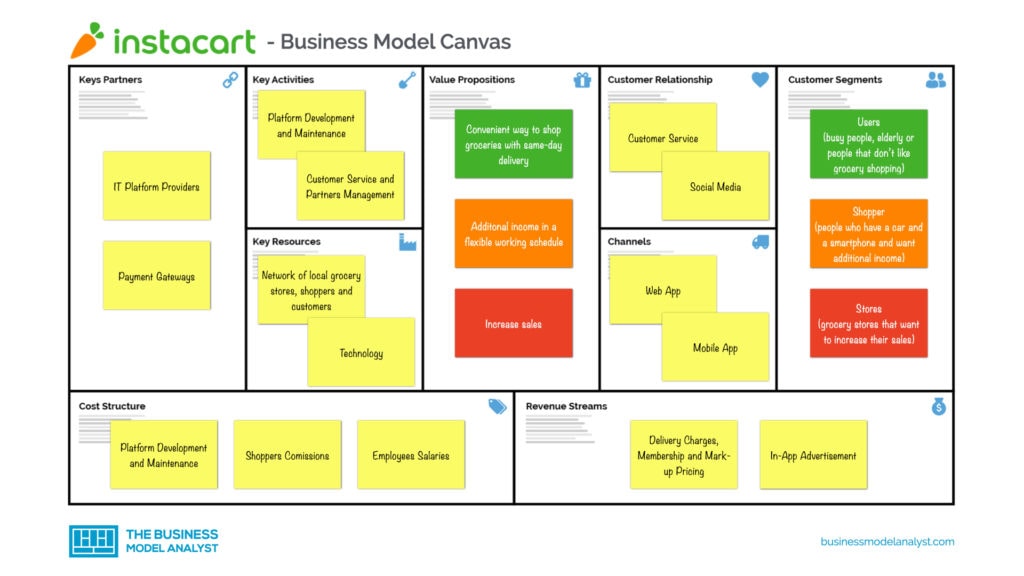
What is the Instacart Business Model?

Instacart uses a shared economy-based business model to offer hyper-local on-demand grocery delivery to customers.

Instacart does not own a grocery store. Instead, it serves as a marketplace for grocery stores to sell their wares.

Source: The Business Model Analyst

Instacart makes money from the companies’ distribution and placement fees.

How is an order placed on Instacart?

  1. Customers use the mobile app to choose their preferred grocery store.
  2. They browse through grocery items, add quantity, & confirm their order.
  3. The shoppers who obtain the order are self-employed or part-time Instacart employees.
  4. They shop for the products requested by the customer and deliver them to their door. 
  5. Customers pay using the app and receive their goods without having to leave the house.

Why is it the right time to build a grocery delivery app?

Easily Manage Inventory

  • Know Inventory Status through an Admin Panel
  • Can be accessed from a smartphone or computer
  • Set notifications about stocks & order them easily 
  • Manage past, present and future stocks

Effectively Achieve Remarketing Targets

  • Collect accurate Customer Data
  • Granularly analyze Customer Behavior
  • Deliver more Personalized Offers
  • Offer Buying Suggestions

Be Future Ready

  • Utilize Cloud-Based Data Storage
  • No reliance on Paperwork
  • Minimize your Carbon Footprint
  • Reduce Delivery Cost with Route Optimization

How Does Code Brew Labs Help?

Customer Web & Apps

Easy Login

Allow users to login seamlessly by entering basic details or through their social media accounts.

Advanced Search

Help customers find & select the groceries they need using the advanced search feature.

Schedule Booking

Enable clients to schedule the delivery of grocery orders as per their convenience.

Push Notifications & Alerts

Send your customers real-time alerts about grocery delivery status via email & SMS.

Order Tracking

Let them track the orders in real time on a map interface.

Secure Payments

Offer multiple secure payment options to give your customers the finest grocery ordering experience.

Admin Dashboard

Manage at Single Place

Access one powerful dashboard to manage all your orders & deliveries.

Monitor Deliveries

Assign drivers & track each and every moment of your deliveries in real-time

Instant Updates

Get notifications regarding all orders & efficiently streamline grocery delivery operations.

Product Listing

Add or delete products from category list as per their availability.

Discounts & Offers

Boost your customer experience by offering them coupons & discount vouchers.

Business Analytics

Monitor and manage daily orders, delayed delivery, and canceled orders.

Delivery Agent App

Easy Onboarding

Ensure convenient & hassle-free onboarding for grocery delivery agents.

Timely Order Notifications

Let the delivery agent get instant order notifications for on time delivery.

Route Optimization

Allow the delivery agents to choose the shortest & fastest delivery routes.

Delivery Status & Details

Provide them complete details like customer info, delivery location, order status, etc.

Share Availability

Give your agent the flexibility to change and share their availability at any time through the app.

Daily Earning Reports

Let your agents keep track of their daily earnings based on the number of deliveries & working hours.

Want to build a robust grocery delivery app? We’ve got you covered.

Talk to us and we’ll be happy to help.

Wait! Looking To Build An App Like Uber?

It's Time To Convert Your Uber Like Business Idea Into Success!

Get Free Consultation From Top Industry Experts:
gif
I would like to keep it to myself